Tile Setting With Diane
This page contains tile related topics such as:
Consultation,
Craftmanship, Materials,
Projects ,
Advice ,
and saving Antique Tile .
Diane Setting Tile
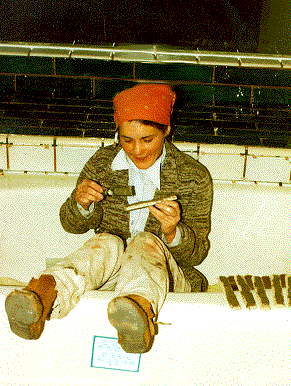
Twenty plus years in the tiling buisness has taught me a lot about the
trade, the creative process, and people. I enjoy helping people imagine
their desired finished product. While I am paid for time and
materials, I try to find options to fit the needs of my clients
who range from contractors and artists, to "do it yourself" homeowners.
To help my clients realize their goals within a budget, I follow a process
in which I:
- Survey the surroundings
- Ask questions regarding taste and aesthetics
- Help the client form a vision of the final project
- Do a time and materials cost estimate
As an independent craftsman, I specialize in setting handmade tile which
is an enjoyable process with beautiful and unique results, but requires
careful installation. Sometimes shells or ceramic objects other than tile
are worked in with the tile and stone, or tile is cut intricately to create
a mosiac effect.
- glass tile
- marble, granite, slate
- ceramic
- hand made tile
- stone
- pebbles
- shells
Here is some of Diane's Work
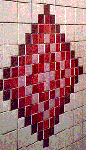
Over the years I have done all types of projects. Each job has its own
physical challenges and aesthetic rewards. They have ranged from the ordinary to
the extraodinary, from small detailed work to large floors. Some of these
projects might suprise you.
- Floors
- Hearths
- Showers
- Tub surrounds
- Counters for bath and kitchen
- Fountains
- Swimming pools
- Murals
- Geodesic domes
- Even a countertop in a converted schoolbus!
After two decades setting tile, I have a good relationship with the
local suppliers
and customers. I rely mostly on word of mouth for referal. Here are
some helpful hints for your next tiling project.
- Decide the square footage of the area you would like to cover.
- Decide your materials budget. The mid-range for most tile is $
4 per square foot.
- Adjust the square footage to meet your budget.
- Make a drawing of the area to be covered.
- Look at some magazines and take pictures you like with you to the
tile store.
- Note that the salesperson should alert you to the proper tile for
the application. (Floor tile is for flooring, less strong tile may be
used on walls, counters, etc. Glazed tiles are recommended for use
near food or water. Non-slick glazes are needed for high traffic areas
.)
- Select your tile and have the store "call out" the square
footage and trim pieces (additional tile is needed for cuts and future
maintenance). Tile is hard to match after two years.
- Select a tile installer or have the supplier recommend one. If
you want to do the work yourself, pay the installer to come by and
consult with you on proper surface preparation and layout.
- Take your time to do a good preparation. It saves time and money
in the long run. Your supplier can loan you a tile breaker board and
can make the more difficult cuts for you.
Good luck!
Links to Tile
Talisman
Handmade Tiles
International Tile and Stone
Expostition
InfoTile: Intenet Tile Center
Mystic Tile
Deer
Creek Pottery
Contact Diane
 Back to Diane's